Phone:15653322638
Physical address:
North of Zhengjia Village, Linchi Town, Zouping City, Binzhou City, Shandong Province

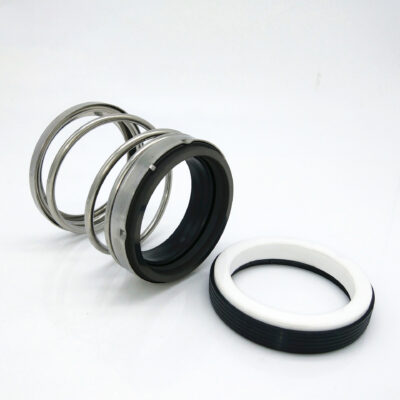
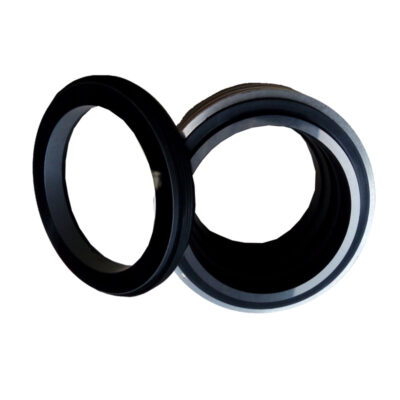
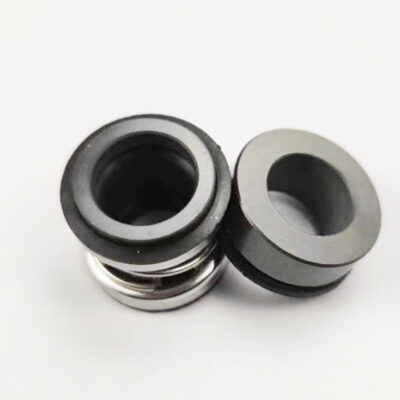
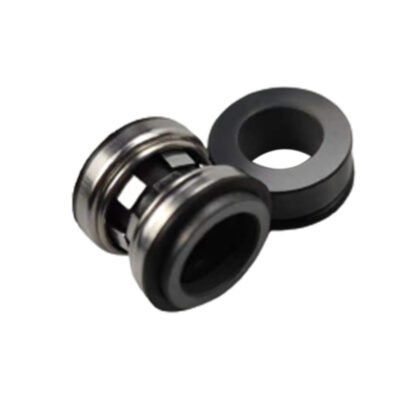
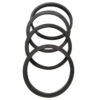
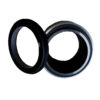
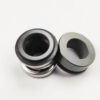
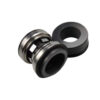
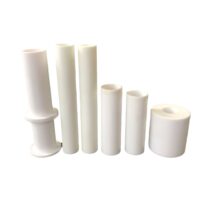
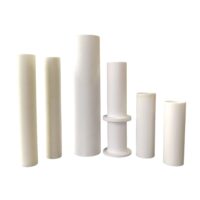
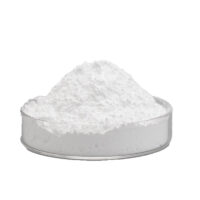
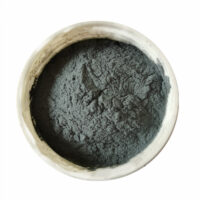
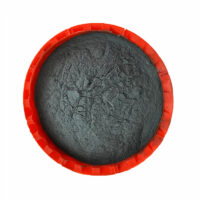
Silicon carbide (SiC), also known as carbon silica, gold steel sand, or refractory sand, is a refractory material made from quartz sand, petroleum coke (or coal coke), and wood chips through high-temperature smelting in a resistance furnace. It is a non-metallic carbide formed by covalent bonding between silicon and carbon elements.
Silicon carbide (SiC), also known as carbon silica, gold steel sand, or refractory sand, is a refractory material made from quartz sand, petroleum coke (or coal coke), and wood chips through high-temperature smelting in a resistance furnace. It is a non-metallic carbide formed by covalent bonding between silicon and carbon elements.
Industrial production of silicon carbide is divided into two types: black silicon carbide and green silicon carbide, both of which are hexagonal crystals with a specific gravity of 3.20-3.25 and a microhardness of 2840-3320kg/mm2. Silicon carbide has high hardness, excellent thermal and electrical conductivity, and can resist oxidation at high temperatures; Mainly used for abrasives, metallurgical deoxidizers, and high-temperature resistant materials, manufacturing semiconductors, manufacturing silicon carbide fibers, etc.
2. Application Fields and Functional Uses
Silicon carbide has four main application areas, namely: functional ceramics, advanced refractory materials, abrasives, and metallurgical raw materials.
As an abrasive, it can be used to make grinding tools, such as grinding wheels, oilstones, grinding heads, sanding tiles, etc.
⑵ As a metallurgical deoxidizer and high-temperature resistant material.
High purity single crystals can be used to manufacture semiconductors and silicon carbide fibers.
Main application: Used for wire cutting of 3-12 inch monocrystalline silicon, polycrystalline silicon, potassium arsenide, quartz crystals, etc. Engineering processing materials for solar photovoltaic industry, semiconductor industry, and piezoelectric crystal industry.
Used in fields such as semiconductors, lightning rods, circuit components, high-temperature applications, ultraviolet detectors, structural materials, astronomy, disc brakes, clutches, diesel particulate filters, filament pyrometers, ceramic films, cutting tools, heating elements, nuclear fuels, jewelry, steel, protective gear, catalyst supports, etc.
Reviews
There are no reviews yet.